

Dental implants have changed the way dentists replace missing teeth. Unlike traditional dentures, implants are anchored into the jawbone to provide a stable foundation for replacement teeth.
But if you're missing multiple teeth or most of the teeth in an entire arch, you may have questions about which type of implant treatment makes the most sense. Two approaches you may encounter are traditional dental implants and All-on-4 dental implants. Although both use implants to support replacement teeth, they are designed for different circumstances.
At Universal Dentistry, serving Philadelphia, PA, and beyond, patients can explore implant dentistry and tooth replacement options that are customized to their oral health needs, anatomy, and long-term goals.
What Are Traditional Dental Implants?
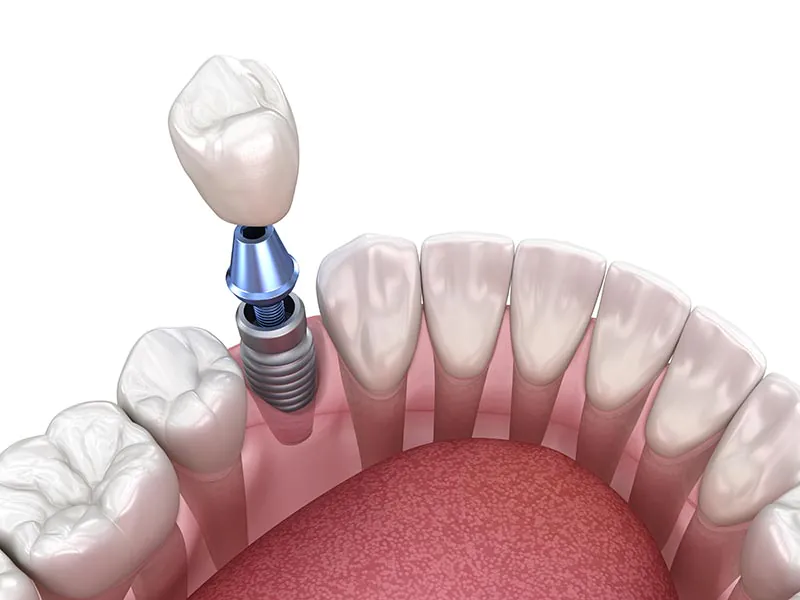 A traditional dental implant replaces the root of a missing tooth.
The implant is surgically placed into the jawbone, where it can integrate with the surrounding bone. Once healing has occurred and the implant is ready to support a restoration, a dental crown can be attached to replace the visible portion of the tooth.
For one missing tooth, this creates an implant-supported dental crown.
If several teeth are missing, multiple implants may be used to support individual crowns, an implant bridge, or another type of restoration.
Benefits of Traditional Dental Implants
Traditional implants can be a good option when you:
- Are missing one or a few teeth
- Want to replace individual teeth
- Have healthy neighboring teeth you'd prefer not to use as bridge supports
- Have adequate bone or are a candidate for bone augmentation
- Want a fixed tooth replacement option
Because the implant replaces the root of the missing tooth, it can also help stimulate the surrounding jawbone and reduce the bone loss associated with missing teeth.
What Are All-on-4 Dental Implants?
All-on-4 is a full-arch implant treatment concept designed to replace an entire upper or lower arch of teeth using four strategically placed implants in appropriate candidates. Instead of placing an individual implant for every missing tooth, the implants are used to support a complete arch of replacement teeth.
All-on-4 implants at Universal Dentistry can be an option for patients who have:
- Lost most or all of their teeth
- Multiple failing teeth
- Severely compromised remaining teeth
- Difficulty with traditional removable dentures
- A desire for a fixed full-arch restoration
The exact treatment plan varies from patient to patient. Some full-arch cases may require a different number of implants or a different implant-supported restoration.
All-on-4 vs. Traditional Implants: What's the Main Difference?
The biggest distinction is the scope of tooth replacement.
Traditional dental implants are commonly used to replace individual missing teeth or support smaller restorations. All-on-4 is intended to support a complete arch of replacement teeth.
For example, someone who lost one lower molar may be an excellent candidate for a traditional implant and crown. Someone who has lost nearly all of the teeth in their upper arch may instead benefit from discussing a full-arch implant solution.
How Many Implants Are Needed?
With traditional implant treatment, the number of implants depends on how many teeth are being replaced and what type of restoration is planned.
An individual missing tooth may require a single dental implant. Several missing teeth may require multiple implants to support a bridge or individual restorations.
All-on-4 uses four strategically positioned implants to support a full arch in appropriate cases.
What Are the Advantages of All-on-4?
For the right patient, the All-on-4 implant system can offer several potential benefits.
Full-Arch Tooth Replacement
All-on-4 is designed to replace an entire arch rather than treating each missing tooth independently.
Stable Support
Because the restoration is supported by dental implants, it can provide greater stability than a traditional removable denture.
Strategic Implant Placement
The implants are positioned according to the patient's available bone and anatomy. In certain cases, this may allow a full-arch restoration to be completed without the same amount of bone grafting that could be required for placing multiple individual implants. This is not guaranteed and depends on the patient's anatomy.
A Fixed Alternative to Removable Dentures
For patients who want to avoid traditional removable dentures, an implant-supported full arch can provide a more stable alternative.
What Are the Advantages of Traditional Implants?
Traditional dental implants offer a different kind of flexibility.
If you are missing only one tooth, there is no need to replace an entire arch. An individual implant and crown can address the specific area of tooth loss.
Traditional implants can also preserve the independence of individual restorations. For example, if you are missing three non-adjacent teeth, your dentist may be able to replace them individually rather than designing one full-arch restoration.
Are All-on-4 Implants Better Than Traditional Implants?
Not necessarily.
The right question to ask your implant dentist isn't "Which implant treatment is better?" but "Which implant treatment is appropriate for my situation?"
A person with one missing tooth wouldn't typically need All-on-4, while a patient with an entire arch of failing teeth may not benefit from treating each tooth individually. Your restorative team at Universal Dentistry will evaluate your specific situation before recommending a tooth replacement approach.
What If I Have Bone Loss?
Jawbone loss is common after tooth loss. When a tooth is missing, the jawbone in that area no longer receives stimulation from the tooth root. Over time, the bone can become thinner or lose volume. This can affect implant placement.
Depending on the location and extent of bone loss, a patient may be a candidate for bone grafting or another procedure to improve the available foundation for implants.
Full-arch treatment can sometimes be planned around areas of existing bone, but not every patient with bone loss is automatically a candidate for All-on-4. A 3D evaluation and comprehensive treatment plan are important when determining your options.
How Long Does Implant Treatment Take?
The timeline varies considerably depending on the type of treatment and your individual needs. Traditional implant treatment may involve:
- Consultation and diagnostic imaging
- Tooth extraction, if necessary
- Bone grafting, if needed
- Implant placement
- Healing and osseointegration
- Placement of the final crown or restoration
Some patients may qualify for immediate or same-day provisional teeth, while others require a longer healing period before the final restoration is placed.
Full-arch implant treatment can also involve temporary teeth while the implants heal before the final restoration is completed.
Your dentist can give you a more specific timeline after evaluating your oral health and treatment needs.
How Do You Care for Implant-Supported Teeth?
Dental implants cannot develop cavities in the same way natural teeth do, but the tissues around implants still need careful attention.
Good home care and professional dental visits are essential for protecting your gums and maintaining the health of the tissues surrounding your implants. Your implant dentist and team may recommend specific brushing, flossing, interdental cleaning, or other tools depending on your restoration.
Patients with implants should also continue routine dental examinations so the health of the implants and surrounding tissues can be monitored.
Which Implant Option Is Right for Me?
Choosing between traditional dental implants and All-on-4 depends on the extent of your tooth loss and your overall oral health. Traditional dental implants may be appropriate when:
- One or several individual teeth are missing
- Remaining teeth are healthy
- You want individual implant-supported restorations
- Your bone and gum health support the planned treatment
All-on-4 implants may be worth discussing when:
- Most or all teeth in an arch are missing or failing
- You want a full-arch fixed restoration
- Traditional dentures are uncomfortable or unstable
- You want an implant-supported alternative to removable dentures
Additional implant options can offer a solution between these two approaches, including implant-supported bridges and overdentures.
What Should I Expect During an Implant Consultation?
A dental implant consultation at Universal Dentistry is an opportunity to look beyond the missing tooth itself and develop a long-term treatment plan. Your implant dentist will evaluate your:
- Remaining teeth
- Gums
- Jawbone
- Bite
- Medical and dental history
- Oral hygiene
- Cosmetic goals
- Functional needs
Imaging may also be used to evaluate the bone and determine where implants could potentially be placed.
From there, your dentist can explain the available options and help you understand the advantages, limitations, timeline, and maintenance requirements associated with each one.
Explore Your Dental Implant Options with Universal Dentistry
Whether you are missing one tooth or dealing with extensive tooth loss, dental implants can provide several options for rebuilding your smile.
At Universal Dentistry, the goal is to develop treatment around the individual patient rather than assuming that one implant solution is right for everyone. If you're considering dental implants or are frustrated with loose or uncomfortable dentures, a consultation can help you understand whether individual implants, an implant-supported bridge, All-on-4, or another restoration may be appropriate.
The best implant treatment is one that fits your anatomy, oral health, functional needs, and long-term goals. A personalized evaluation is the first step toward determining which option can help you restore your smile with confidence. Schedule your implant consult at one of our five Philadelphia-area locations today!